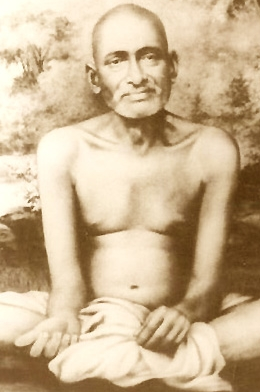
English translation of Adhyay 3. See the Glossary for special terms.
॥ Shri Ganeshay Namah ॥
1. O Vakratunda, remover of obstacles — you are the bringer of joy, you are the remover of sorrow; you sanctify those who take refuge in you.
2. Anger is a cause of destruction — Shankar himself experienced it, when in anger he severed his own son's lotus-face.
3. Anger should not be so great that the soul becomes anxiety-ridden. Let there be no torment to others — this is the path to follow.
4. Practice devotion in such a measure as brings contentment, as gives joy to others — but do not abandon worldly life.
5. Engage so much in name-repetition that you obtain peace of mind. Importance lies in peace, in a content disposition.
6. Be one who strives; do not be content with little. Strive — but do not snatch from another.
7. In snatching from another, ruin is certain — this comes to experience. Do not engage in such acts.
8. He who wishes for auspiciousness should not contemplate the inauspicious. When conduct becomes auspicious, you reach an auspicious destination.
9. By the Name comes auspicious contemplation; by auspicious contemplation comes remembrance of the Guru; by remembrance of the Guru come the Guru's feet — thereby an auspicious garland-arch at the home.
10. What became auspicious became filled with the Guru. Whatever was offered with devotion, the Guru accepted.
11. Such was the simple-hearted Guru Gajanan — he took the devotees close. A devotee made a vow of ganja; Shri Guru accepted it.
12. A vow of ganja — what audacity of the devotee! The Guru recognized the devotee, his pure mind.
13. When Guru Gajanan was at Shegaon, what to ask of the crowd? Without anyone deliberately gathering them, the heart was drawn.
14. Crowds need not be gathered, as is seen in politics. Leaders gather them by hire; the Guru gathers by the Name.
15. The leaders' impure minds — wealth adds to them. They adopt many tricks to draw people to their side.
16. The Guru's mind is always pure; he counts wealth as trifling. In the abundance of good deeds, devotional feeling awakens.
17. The seat of purity endures; rented seating does not. This comes to experience: in purity all is obtained.
18. The Guru's words — substantial thoughts. Who shall corrupt them? He who uplifts another shall himself be of right conduct.
19. However difficult the situation, the Guru's worth is known. Shri Guru is supreme by his miracles; the politician is supreme by money and tricks.
20. Such a leader endures who acts with a pure mind. The essence of the Vedas tells the same: in purity of mind all endures.
21. Live for transactions just as much as needed; inwardly, the feeling should be of meeting the Lord. Mentally becoming His, His grace is always there.
22. One eager for the Lord's attainment is eager to plant the sapling of the Name. With the Name on the lips, a smiling face; meeting the Lord with a smiling face.
23. He who sows the seed of the Name thus becomes imperishable through the Name. Though he goes by bodily form, he becomes immortal through the Name.
24. Daily fresh and new — at Shegaon should be seen. Where Maharaj is, leela itself dances.
25. At Bankat's house, in the early morning hour, men and women came for darshan, coming from other towns.
26. Devotees of all kinds gathered; vows of all kinds were made. They took Maharaj's darshan and were fulfilled.
27. Eccentric devotees with eccentric vows came to please Gajanan, to fulfill their vows, to receive his blessings.
28. Everyone wishes to become a servant of Gajanan, but it is not so easy — this is convinced only by experience.
29. Tests are taken again and again. Those who pass become his servants; the rest remain as they are.
30. The Guru's feet are not obtained easily; not by mere vow are they obtained. One must pour out everything of oneself — this is not understood by all.
31. First one must become His, then make a vow. Make such a vow as the Guru will accept.
32. Such was a Goswami of Kashi, inwardly devoted to Maharaj. He made a vow of ganja, saying: "Let him accept it."
33. At the morning hour, the Goswami of Kashi came. Seeing the queue, he wondered: "How will darshan happen?"
34. In the queue were wealthy men and women; this Goswami was a beggar. Who would let him stand? He thought for a moment.
35. An ochre rag on the head, a torn loincloth to wear, a bag at the waist — he sat down in a corner.
36. The crowd for darshan was great; how would darshan happen? This thought constantly tormented the Goswami.
37. The remembrance of the Name was on his lips — Gajanan, Gajanan — his contemplation was on him. He wondered: "How will darshan come about?
38. When I was at Kashi, I heard his stories; my heart was drawn; I came for darshan.
39. When I was at Kashi, while making the ganja vow, nothing came to my mind: how shall I offer this to him?
40. When the ganja vow is known, people will kick me. They will say: 'Have you come here to defile him?'
41. But I made the vow with sincere mind; with love I made the vow. Let the Guru accept the buti — my life shall be blessed.
42. What I love — that is what the vow becomes. By offering that very thing, the vow is fulfilled."
43. Whatever thoughts were going on in his mind, Shri Guru in person knew through inner-knowledge.
44. Although the queue was very long, the Guru-Mother became pleased. The Guru gave a sign; the Goswami understood it.
45. Shri Guru, many a time, does not speak at all. He speaks at such a time as proves to be the right time.
46. This Goswami was meritorious by nature; in addition, he did remembrance of the Name. With remaining merit comes birth in a good family.
47. The fortune of a soul depends on each and every action. By meritorious action, one becomes meritorious.
48. The Goswami of Kashi was meritorious; Gajanan recognized him and called him from a corner.
49. The Guru knows what is in the mind — this truth proves true. The unfathomable power knows; this comes to demonstration.
50. From the Goswami's pocket the Guru drew out the buti of ganja. He said: "Why have you hidden this?" — and made the sign clear to all.
51. Gajanan was, and shall remain, powerful. The Goswami too was clever by nature. He took quick advantage of the opportunity and spoke promptly to the Guru:
52. "I shall give the buti only on one condition: never put me away from you." The Guru gave assent and accepted it.
53. The Guru was not enamored of the buti, though he took the buti close. The Guru was enamored of the simple feeling by which the ganja was offered.
54. Some think: what comes of a vow? What comes of tirth and angara (sacred water and ash)? This puzzles them.
55. When medical treatment will not cure an illness, how shall tirth and angara cure the illness?
56. Doubts upon doubts in the mind, surmise upon surmise in the mind, a turmoil rises in the mind, many questions in the mind.
57. Peace of consciousness slips; the wheel of thought runs swiftly. When such a wheel runs swiftly, what shall the Guru do there?
58. The Guru will not say something that disturbs peace. The Guru is not at fault — only the karma is at fault.
59. In life, action is supreme. Every soul has to act; he has to bear its fruit. None shall be free from this.
60. As is one's contemplation, so is one's conduct. Don't give place to doubt — that is a cause of danger.
61. Whatever action is done with doubt, there is no progress. Samshayatma vinashyati — "the doubting soul perishes" — this proves to be the true saying.
62. Vedanta has said so much; those who followed it were blessed in life; their lives were fulfilled.
63. Whatever is done with faith proves fruitful. By relying on faith, the burden becomes light.
64. By faith a deadly crisis is averted — this comes to demonstration. Once a deadly crisis came upon Janrao Deshmukh.
65. In Shegaon, Janrao Deshmukh, a famous person, was tormented by fever; he reached the brink of death.
66. Fever surrounded Janrao; many days passed; medical treatments were given, but all proved useless.
67. The disease grew strong; Janrao became weak. He who becomes worn and weak — only then does he become absorbed at the Guru's feet.
68. This came to experience — so it happened with Janrao. Medicines and treatments were exhausted; relatives fell into thought.
69. No strength remained. He who becomes powerless goes to the Guru, to escape all calamities.
70. The Guru-Mother dwelt at Bankat's house. "Let us go to his house" — the relatives thought.
71. If the holy one bears it in mind, if his blessings are obtained, Janrao shall live now. Let there be no delay now.
72. One went to Bankat and told the whole matter. He said: "Pray to the Guru; let him give tirth and angara."
73. On that, Bankat said: "Take the tirth with faith — relief shall come to him; I assure you of this."
74. He said to his father — Bhavaniram, the great and good — and they began to plead with the Guru: "Please give tirth and angara.
75. O Shri Guru! We walk in darkness; we take the visible alone as truth; the invisible we take as untruth; only when failure comes do we run for help.
76. Show us the light quickly. All is feeling; all is faith. Thereby Janrao's fever shall quickly go."
77. The tirth was given to the relative. He went to Janrao's house, gave him the tirth with faith. The glory of faith bore fruit.
78. Gajanan saved a life. Saints avert deadly crises — this came to experience. The Guru in true sense is to be called powerful.
79. Janrao's fever was cured; the glory of tirth and angara was demonstrated. Each became Gajanan's; each began to hold his feet.
80. The tirth of the Guru's feet bore fruit for Janrao. May it bear fruit for you in the same way — this is my prayer to Gajanan.
81. Gajanan was not merely one who wore the garb; he was a true realized soul. After Janrao was convinced, a bhandara (community feast) was held at Bankat's house.
82. Don't ask absurd, pointless questions. Going to the Guru, you shall become a cause of embarrassment.
83. The play of faith goes on; he who relies on faith — he alone crosses over in critical moments. Thus the Guru repeatedly tells.
84. Don't pointlessly examine him. What test will you give? He shall pass any test. Don't have doubts upon doubts.
85. What questions will you ask? Your questions will be trivial, meaningless — but you will get a fitting answer.
86. Ask questions like: "How should one live? How shall life become harmonious? What does the Lord wish?"
87. By the heart's pull, the Guru's darshan happens. He attracts by earnestness — not by worldly wealth.
88. Practice such devotion as the Guru-figure becomes pleased with. This should be the inner wish, expressed at the Guru's feet.
89. The Guru who knows the inner being — how shall he be allured by mere attendance? How shall he be allured by wealth? He is allured only by true love.
90. Attendance is not what is important. Let the seat be of earnestness; let the heart's pull be there — that is the time of obtaining the Guru.
91. Only what is obtained by earnestness endures. What is not from the heart comes to be exposed.
92. It becomes a cause of embarrassment; the Guru's grace is destroyed; what is becomes lost — as it happened with Vithoba.
93. Such was Vithoba Ghatole, who stayed near the Master. As pretense and greed grew strong, the Guru pushed him away at once.
94. In life, feeling is important; likewise the inner word. That Vithoba Ghatole's feeling was greedy in nature.
95. Pure feeling there was not — therefore the proximity to Guru's grace was destroyed. The summit of pretense was reached; the moment of embarrassment came.
96. Maharaj recognized him — Vithoba Ghatole the devotee. He told him several times: "Don't bring embarrassment.
97. Never follow pretense; one day you will create trouble. Don't corrupt your understanding; you will lose this golden opportunity."
98. The Guru was strict by nature; he tolerated many situations. But what is harmful in the spiritual path — the Guru would not allow.
99. Once when the Guru was asleep, people from another town came for darshan. The purpose was told to Vithoba; through favor he brought them close.
100. As favoritism is sometimes useful, so it proves useless. A true holy man, a yogi, never asks for favoritism.
101. This too came to demonstration. Maharaj became greatly angry; an unstoppable situation came upon Vithoba Ghatole.
102. What a calamity occurred! Vithoba was permanently distanced. But the Guru's torment was gone; the Guru became free of the trouble.
103. Maharaj was by nature detached; how shall he become entangled in the transactions and troubles in which all people are?
104. Maharaj avoids troubles; he knows the inner feeling. True Gurus behave thus.
105. Such is the powerful Gajanan, of extraordinary miracles. People are astonished and naturally take hold of the Guru's feet.
106. Gana-Maharaj says: He who acts with pure inner being — for him nothing wrong shall occur; everything shall happen as he wishes.
107. Where there is lack of pure faith, such acts find scope; thereby there is lack of attainment of the Guru, lack of the Guru's grace.
108. Knowing earnestness and faith, the Gurus protect their devotees. Without pure inner being, the Guru's feet are not obtained.
॥ Shubham Bhavatu ॥
॥ Offered to Shri Ganapati and Saraswati ॥
॥ Thus ends the third chapter of Shri Guru Gajanan Leela Granth ॥