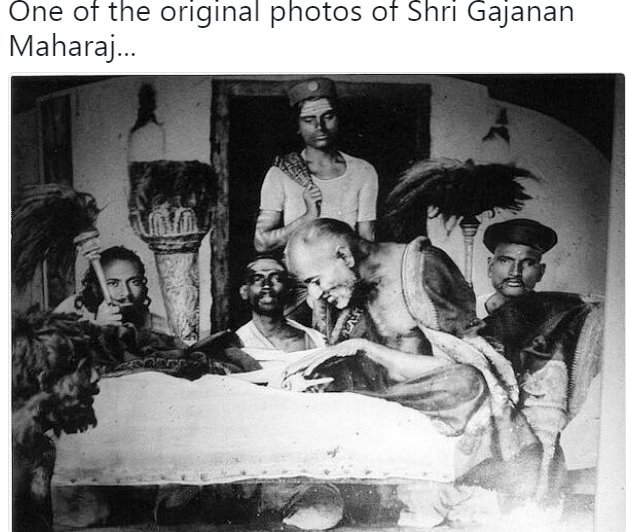
English translation of Adhyay 10. See the Glossary for special terms.
॥ Shri Ganeshay Namah ॥
1. O Lord, O Supreme — listen for a moment to the heart's troubles. You truly prove helpful.
2. You listen to such a devotee who lives having become yours. You alone save him in critical moments; you keep him joyful.
3. Hey Gana-Maharaj, this is known: thereby the mind is caught in you. Saraswati has made me sit; the flowers of good thoughts have intoxicated (me).
4. Gana-Maharaj is entangled in worldly life; the soul is heavily caught in worldly affairs; likewise the original — service wearies the trade.
5. On the faith of the Guru-mantra, remembrance of Guru in all eight watches; many waves of thoughts in the mind, making the heart restless.
6. How shall the writing of the book happen? Remembrance of you, of the ten avatars. Save me; shower the rain of grace.
7. Thereby the mind shall be cheerful; it shall be caught in the writing of the book; not in the surroundings, by which failure in the lap.
8. I write the tenth chapter; let the Guru be pleased by the worship; let me behave thus; let the blessing always be obtained.
9. Whom we consider the Guru — when we worship him, the Lord is pleased; he fulfills the heart's desires; he ever pleases the devotee.
10. Such was the devotee of Amravati — Atmaram Bhikaji by name; ever in the disposition of Guru-service — it was visible in his actions.
11. Maharaj came to his home; Guru-puja was held at home. He whose house's worship he accepts — quick rise of fortune.
12. Many devotees at the time of worship began to enjoy the joy; began to look at the Guru-Mother, who had become absorbed in the Name.
13. Balabhau, the nephew of Atmaram, came to look at the splendor of the worship, of the Guru-puja.
14. What had been long in his mind erupted today. He held the Guru's feet; asked for the gracious blessing.
15. Such a blessing was given that he became a disciple, lived. He completely forgot the job; bid farewell to the job.
16. No concern for the job, the household, wife and children. The wish that had long been in his mind was today truly fulfilled.
17. Ganesh Shrikrishna Khaparde, eminent in legal practice, of great prestige in Amravati — heaps of rupees fell in legal practice.
18. He was of religious nature; he would do worship; the conduct of a virtuous gentleman was his.
19. The wish in his mind: let the Guru-Mother come to my house. The Master knew; he went to his house.
20. Dadasaheb Khaparde performed worship with great respect: "Let the Master be pleased" — this the wish in his heart.
21. Ganesh Appa, the Lingayat trader, was at the place of worship. Chandrabhaga, his life-partner, was with him at the place.
22. Husband and wife made salutation to the Master truly. The thought of worship in the mind — the Master truly knew.
23. Chandrabhaga said to her husband: "Take the Master to (our) house; perform the celebration of worship; make the request."
24. The husband said to the wife: "You have gone mad. Khaparde is a great gentleman; that is why the worship celebration was held at his home.
25. To take a sadhu to (one's) home, influence is needed. If it is in fortune, the Guru comes home."
26. Chandrabhaga said to her husband: "Listen to the inner deity. The sadhu shall come home — so it feels to my mind."
27. Ganesh Appa would not speak; he had no courage. Many thoughts in his mind: how to tell people?
28. The Master recognized the thought; took his hand; said: "Show me your house. I shall accept the worship."
29. Ganesh Appa's worship was accepted; husband and wife became blessed; the heart's wish bore fruit, which had long resided in their minds.
30. At every worship, Balabhau was present. He recognized the eternal; his faith settled.
31. Balabhau was overwhelmed; began to look at the Master; made the resolve of devotion; gave resignation from his job.
32. Ganesh Appa and Chandrabhaga — nothing else came to mind. Ever the longing for Guru-service — this thought in the mind.
33. Both became Master's devotees; renounced the household; recognized the eternal; reveled in the eternal.
34. Then Maharaj set out; he proceeded to Shegaon. He did not go to anyone's house; he sat in the Mote (family) temple.
35. East of the temple, the place was barren. That alone was suitable for the Master; he sat at that place.
36. He was not enamored of the splendor of Krishnaji's house. He would go to anyone's house — wherever it would come to his mind.
37. Krishnaji learned the news; became sad in his heart. He came to Maharaj; began to plead.
38. "O Shri Guru! What lacking did I do, for such behavior to occur — leaving my farm? This is not proper.
39. Forgive my mistake; let there be a gracious gaze. Don't choose this place; listen to my entreaty.
40. The place near the Deshmukh is a place of hostile feeling. Ask for another place; whatever you say, that place we shall give.
41. No shortage of place. Stay at my home." The Master remembered Bankat. He said: "Send word to him."
42. Such a wonder happened: Bankat came. He said to Krishnaji: "Take out (these) thoughts from your mind."
43. He looked at Bankat — "He alone shall solve the puzzle." What had happened with Bankat — that was happening here today.
44. Bankat was very clever by nature, a clever man of business, likewise a trader. What shall he say to that?
45. Bankat spoke: "He has left my house too; the same situation has come here. He does not stay still in anyone's house.
46. One should not pain the Master; consider that itself the welfare. Whatever comes to his mind, let him behave thus.
47. Never pain the Guru; always please the Guru. Take his word as authority; abandon your stubbornness."
48. What is in the inner being is spoken; not other (mere) talk. Krishnaji was convinced; the Master smiled at that.
49. Sakharam Asolkar gave a place from the heart. Sawjis took pains in the construction of the math (monastery) at once.
50. Once Maharaj, with the devotees, was sitting in the math. The Master was in good mood, in the intoxication of the chillum.
51. In a different trance, in a different bliss; chillum in mouth, "Gan Gan" mantra in mind.
52. Bhaskar was taking care; was giving the chillum quickly; ready in caregiving — none was like Bhaskar.
53. The fondness was for the chillum, not to be called addiction. He whose japa runs day and night — what other (thing) shall he speak?
54. He was absorbed by body, speech, mind; ever toiled for devotees. To fulfill the Lord's wish, as if he had taken incarnation.
55. Bhaskar, Balabhau, Pitambar, Ramchandra Gurav family, Ganesh Appa and others — were ready in service.
56. When competition occurs in devotion, that itself proves an obstacle. Where this is seen, rivalry occurs there.
57. The same happened here. Bhaskar felt thus: Balabhau practiced pretense; took close to (himself) sweetmeats and barfi.
58. He practiced the pretense of service; kicked away worldly life; some obstacle came across; thereby left the job.
59. "Let him not endure here. Let the Guru recognize the motive. Let him drive Balabhau away. Let the play of competition end."
60. The Guru knew all — Bhaskar's longing. The order came at once. He called Balabhau near.
61. He slaps Balabhau on the cheek hard. "Don't stay in the math; you have been spoiled by sweets and barfi."
62. Balabhau could not understand: what crime did I commit? He made many entreaties: "Why such (a mood) in your mind today?"
63. The Master became very angry; began to thrash with an umbrella. Beat him so much it could break — none could understand anything.
64. Beating with a stick too, then beating with kicks and fists landed on his back. Bhaskar was content.
65. Bhaskar felt now: Balabhau shall not come to the math; as the situation was with Vithoba, so with Balabhau.
66. Balabhau will go for good; the path of service will be free; the feeling of competition destroyed; the thorn permanently removed.
67. Competition torments greatly; many tortures within; in that action they descend; devotion is lost in (their) interior.
68. Devotion goes apart; competition is fundamentally heavy. Taking its side, devotion gets no opportunity.
69. The cycle ran on so; Bhaskar was not let go. But by Guru's grace the puzzle unfolded; the hard became easy.
70. Bhaskar could not bear it; entreated Maharaj; became distressed in mind: "I have committed a great offense."
71. Balabhau was released; Maharaj stopped. Balabhau was looked at; not a sign of welts was visible.
72. Balabhau's authority was understood — the authority of Guru-devotion, devotion. Bhaskar understood; he said: "Such a mistake shall not happen."
73. So he behaved in the future — not standing in anyone's devotion; let stay in Guru-service whoever was in such a service-feeling.
74. Pain from relatives is tormenting; the Guru's beating is not harmful — to the true servant; otherwise the opposite.
75. Until something is desired, love settles on objects. When the mind tires, it becomes unwanted; importance reduces.
76. Not (just) of objects, only of the lifeless — but it happens with the living too: animals, birds, creatures.
77. Animals have minds; love settles on the master. Living with faithfulness — happens according to past accumulation.
78. In life importance lies in past accumulation, by which destiny in (one's) lot. Sukhalal's cow — destiny was in fortune.
79. Sukhalal Agarwala lived at Balapur. Endowed with farms and fields; a herd of cows and cattle.
80. Wealth and grain in his lot, splendor in his fortune; but one cow in fortune — wickedness in (its) body.
81. In the bodily form of a cow — therefore called a cow; practicing violence; running here and there wildly.
82. If by chance the cow stayed loose, it would (gore people) on its horns in no time; entering whichever shop, those there were frightened in heart.
83. It would poke its mouth wherever; would spoil wealth and grain; would behave like a bull — what does not befit a cow.
84. Would behave like a thug; would keep people in fear; would go wherever; would create chaos.
85. People became weary of the trouble; Sukhalal's friends became enemies. Hostility increased; the torment became unbearable.
86. He became anxiety-ridden; the household became all troubled; the home became calamity-ridden; the joyful atmosphere was lost.
87. The Lord preserves his own importance; the situation proves the pretext. Thereby he brings about good company; he shows the way to people.
88. The doer-prompter is the Creator; he alone shall become the savior. When destined experience comes in the lot, the world-savior makes it bearable.
89. Whatever the villagers suggest, that he had to do. Despair was accepted; nothing worked.
90. The villagers said: "Sell the cow now. Avoid anguish now. Let (us) live with peaceful mind."
91. The cow was taken to be sold. None would buy. Nothing solved the anguish. A question for all.
92. When an object is of trifling value, when an object becomes useless, importance is not given to compensation; it is given free, in essence.
93. No one took the cow; they were afraid of its wickedness. Friend-circle said to Sukhalal: "Sell it to a butcher."
94. Sukhalal would not agree to give the cow to a butcher. Although the wickedness was there, he had not the heart.
95. Past impressions would awaken; many thoughts came to mind: "Don't get into the web of sin; never any release from it."
96. Entrusting to people the destiny, it was decided to kill the cow. He entrusted everything to a Pathan; took breaths of relief.
97. What did the Pathan do? He took aim with a gun. His aim missed; Time did not give support.
98. As if the cow understood this — it gored the Pathan. The Pathan's life writhed; the Pathan attained death.
99. An untoward situation arose; the Pathan died for nothing. A question for all: what shall be done with the cow?
100. The villagers would not sit still; the same thought troubled them. Each was occupied in releasing themselves from the cow, in many efforts.
101. One thought tormented all; it caused various tendencies. Nothing prevailed before destiny; nothing came to anyone's mind.
102. After some time passed, the villagers decided: "Let us take the cow to Shegaon now; let us offer it to the Guru-Lord.
103. Let us offer it to Gajanan; merit shall arise; we shall avoid the cow's torment." It seemed a proper thought to the mind.
104. The merit was not Sukhalal's; it was not the villagers'. The merit was the cow's — of one mute creature.
105. The cow was tied; tied and placed in a cart. The cow was tied so that not a single limb was left free.
106. The summit of suffering was reached; she met the test of essence. Being in subjection, she was weary of subjection.
107. When leaving the realm of mortals, one must endure tortures. All depends on destiny; no release from it.
108. To go from one (life) to another, many troubles befall the soul; for release from the womb, the soul must endure.
109. The cow's merit arose, by ending the sin-karma. The villagers did not know this — by which they came to Shegaon.
110. The party came to Shegaon; brought the cow to the math. They called out to the Guru-Mother. The Guru-Mother stood up.
111. The Master saw the cow — the bound mute creature. The Master asked the question: "Why have you tied the cow-mother?"
112. The villagers said to the Master: "Not for nothing have we tied her. The cow has wreaked havoc; the whole village has been (set) on its head."
113. The Master smiled at the ignorance; said at that very moment: "Release the cow now. She shall not strike anyone."
114. The cow was released. At once she held the (Master's) feet. The Master made a touch; through the touch she understood.
115. "Don't trouble anyone; don't act with wickedness; consider all as one's own; let life prove useful."
116. The cow understood everything; she gave assent with her neck; remorse came to her; it was visible in her actions.
117. Past-life relationships, their karmic bonds — this teaching was being given; the village-fellowship understood.
118. The villagers were astonished; they realized their ignorance; they understood the Master's power; they held Maharaj's feet.
119. The cow stayed there itself; her disposition changed; she began to look at all; tears flowed from her eyes.
120. All the party became distressed; began to speak in remorse: "We unjustly mistreated her; we tormented the cow-mother."
121. They asked the Master's pardon; the villagers took the path (back). Her offspring began to dwell (there); blessed she proved in life.
122. It was not in Sukhalal's destiny; it was in the cow's destiny. Sukhalal returned to the village; the cow stayed in Shegaon.
123. Where food and water are — that is where (one stays); when they end, one must go elsewhere.
124. The play of past accumulation; importance to past accumulation. By past accumulation, fortune arises. The experience came to Lakshman.
125. Lakshman of Karanja was surrounded by stomach-pain. Many medicines and treatments — but no relief came to him.
126. Remedies proved unavailing; it was decided to go to Shegaon. Husband and wife came to Shegaon; held the Master's feet.
127. She spread her sari (in entreaty); told all the troubles. "Medical treatment proved useless. We have come to ask for tirth."
128. The Master was eating a mango, but his attention was on her trouble; he was knowing all the sorrow; he was listening to her speech.
129. By the invocation, the Master became pleased; he tossed the leftover mango; gazed steadily at Lakshman. The mystery of the Guru's act was not understood.
130. Husband and wife were astonished. The devotees said to her: "Go now to Karanja; have the husband eat the mango."
131. Both went to Karanja; told the whole matter. They were considered fools (and told): "The disease shall worsen for him.
132. Don't get into trouble; he shall not become free of disease. The mango will make him diseased; it shall add to the illness."
133. Importance of faith for both — they remembered the Master. Eating the leftover mango — how shall it be convinced for the villagers?
134. Lakshman ate the mango; relief came to his health. The Master's authority was understood, by which the disease was averted.
135. Some time passed. Maharaj went to Karanja. Bhaskar and Balabhau in support — were ready in Guru-service.
136. Lakshman gave invitation; the Master accepted it. Arrangement for worship was made; hospitality was held.
137. Lakshman did the celebration, but the feeling in mind was different. The Master recognized the pretentiousness; it did not sit well with him.
138. Lakshman said to Maharaj: "Guru's feet have been obtained at the home; thereby fortune has arisen; let blessings be upon the children.
139. Whatever is of this house — all is yours; all is of your grace; what is mine of this house?"
140. He took the Master around the house; he was content for a moment. "The store of wealth and grain — it shall surely fill now."
141. He showed everything to Gajanan, but not the storehouse. "What shall Gajanan understand?" — so it felt to his mind.
142. "If the Master sees the storehouse, it shall have to be emptied." He began to hide the splendor. Anger came to Gajanan.
143. The Master said to him: "Look after the storehouse. We don't want the storehouse; it shall not come into use."
144. Lakshman's fortune came in the way; Gajanan left from there. Six months passed; the storehouse became all empty.
145. The result of pretense — said farewell to splendor. Vaikuntha-dham (heaven) at hand became cremation-ground.
146. The Guru shall never empty the storehouse. He does not live on it; don't have wrong thoughts in mind.
147. One who keeps faith in the Guru — his storehouse will fill; give-and-take shall happen; all shall be smooth.
148. Gana-Maharaj tells the devotees: convince the situations to the mind; bear the past accumulation; don't have competition in devotion.
149. Spend life in remembrance of the Guru; let the soul revel in good company; let there be no pretense; let no vow be left pending.
॥ Shubham Bhavatu ॥
॥ Offered to Shri Ganapati and Saraswati ॥
॥ Thus ends the tenth chapter of Shri Guru Gajanan Leela Granth ॥