English translation of Adhyay 15. See the Glossary for special terms.
॥ Shri Ganeshay Namah ॥
1. O Supreme Lord Narayan — many motives in my mind; for fulfilling them, don't say "no, no."
2. In your assent itself they take form; you alone seem the support to devotees; don't make (us) helpless; (I) shall keep faith on you alone.
3. One gives, another protects — Gana-Maharaj knows this; (I) entreat you to come to (this) place; entreat (you) to help with the book.
4. Joy is obtained in pleasing the Guru — the devotee-fellowship knows this. The Guru tests from time to time; takes the passing one near.
5. Come to my place; give the devotees' test; give the certificate to those who pass; the devotees shall be joyful.
6. I shall be content if devotees pass; you know my mind; I shall not ask anything else; make them Lokmanya (beloved of people).
7. Let calamity come upon devotees; on those becoming Lokmanya by your grace — without you, none shall save them — this is known to the devotees.
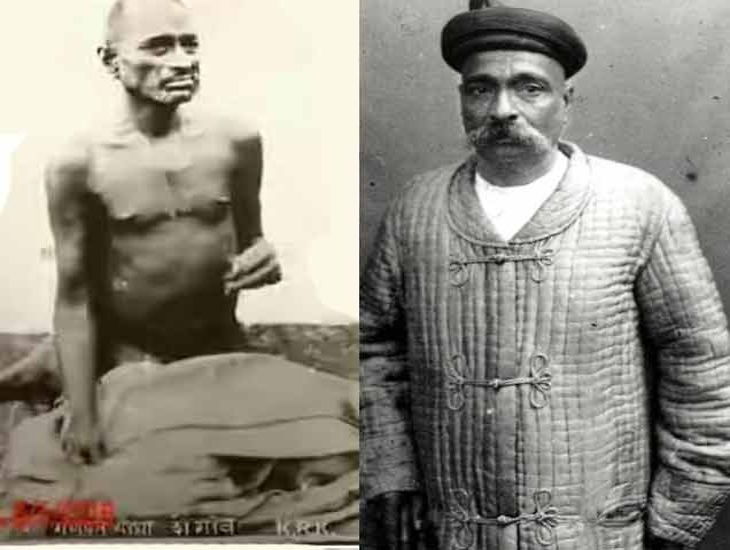
8. So it was with Lokmanya; calamity came upon him too; the Master's blessing proved helpful; thereby Bal became Lokmanya.
9. So it happened to the situation: at Akola, the Shivajayanti festival; great leaders were called; Lokmanya was invited.
10. Shivaji, the worthy son of Mother Jijabai, the worthy son of Mother India, would not care even for life — would live only for her.
11. Shivaji's mother Jijabai gave the impressions of brave warriors; father Shahaji (was) in another land, in the Mughals' service.
12. Shivaji was originally a brave warrior; in addition, the mother's teaching; great Mavalas (mountain warriors) were obtained; he conquered many forts.
13. Trying out guerrilla tactics, putting fear into enemies, protecting women's honor, but not robbing anyone.
14. Samartha Ramdas was obtained as Guru; life became filled with inspiration. Such valor he showed (that) the page in history became immortal.
15. One who remains immortal by name, behaves with such action, whose life is for society — his festivals are held regularly.
16. With the motive of obtaining inspiration, there are inspirational speeches; speakers come with enthusiasm, who are mainly invited.
17. Shivajayanti festival at Akola: it felt that Lokmanya should be called, for a rousing speech, for people to obtain inspiration.
18. "Call the Master to the meeting" — so it felt to some. As Ramdas (was) shelter for Shivaji, so the Master for Tilak.
19. Some among the party split off; began to say to others: "Don't (call); the mad-fellow will (do) tricks, by which the meeting may be disrupted.
20. The festival shall happen first anyway; if the Master comes in addition, then there shall be confusion; that shall be the last (festival).
21. Don't (give) invitation to the Master; don't (give) invitation to trouble; (we shall) become a cause of disgrace; Tilak's speech shall not be effective.
22. What kind of yogi is he? He is a thorough fraud; begs door to door; not a sign of a yogi in him.
23. Don't, don't — that pretense here, that hubbub of trouble here. (He is) a brake in the running cart; thereby many calamities come."
24. Each avoids trouble; who shall accept it? When the Master comes to the meeting, there shall be confusion in the meeting.
25. People do not know the mystery; the foolish considers another foolish. He who calls the Master foolish — he himself should be considered foolish.
26. One who is faithless is foolish; he shall never reform; he shall speak so.
27. Those who rejected the Master — they themselves proved foolish in the situation; those who invited him — they alone proved correct in the situation.
28. At last it was decided to invite (him); was entrusted to Dadasaheb Khaparde. Dadasaheb went to Shegaon; held the Master's feet.
29. "We shall not do such tricks that the meeting be disrupted" — Khaparde was astonished; (the Master being) of inner-knowledge was convinced.
30. Inner-knowledge is convinced through situation, not through self-praise, not by mere influence of speech, or by another's saying.
31. The day of the meeting dawned; no limit to joy; there was joy of festival; rather the festival was of joy.
32. In one, many are obtained; each was eager for the meeting; many came from afar; the speech (was) just as effective.
33. They were waiting for Gajanan, for one Master, for one yogi's leela, for one (display of) power.
34. For one blessing, for one gracious gaze; let his company be (with us) — this is the wish of all.
35. May (his) gracious gaze be (there); may the act prove immortal; let (our) expectation be such; let it prove proper.
36. Tilak was originally gold; let Gajanan add to (it), by the company of one yogi, by the blessing of one yogi.
37. Gold — what shall it not glitter? Its lustre shall spread; in one lustre another lustre shall mix; a lustrous, brilliant atmosphere shall be.
38. All the people's eyes were fixed on the two: one eye on Tilak, the second eye on the yogi, to take lessons of life.
39. So too were (their) ears, to hear something special. The attention of all was fixed; (they) were admirers of both.
40. Tilak stood up; began the speech; told the importance of the festival; explained the importance of unity.
41. The crowd was growing; spontaneous attendance was (there); curiosity reached the peak; (they) were waiting to hear something special.
42. Tilak spoke firmly; he forgot himself; lashed verbal whips on the British; for that itself he had come.
43. This did not please Maharaj; he knew the next situations; he hectored Tilak; suggested timely awareness.
44. Capability and patriotism, principled disposition and strong disposition — were company at every moment; that itself was impelling.
45. Tilak kept speaking; became the cause of the next situation; the government declared (him) guilty; the government filed cases.
46. The Master became the pretext for discussion; rather, the Master was the cause; the Master's power was awakened — this came to demonstration here.
47. When the meeting ended, the listeners went home; on Tilak however, cases were filed; it was usual; (it) didn't seem special to Tilak.
48. The companions' efforts continued; even efforts of vows and angara were made; Khaparde and Kolhatkar set out; Khaparde said to Kolhatkar:
49. "You go to Shegaon to plead with the Master; I go to Mumbai for the court work."
50. Kolhatkar came for darshan, to take the Master's blessings. Although each one's motive was different, the action was one.
51. It was Maharaj's habit to give blessings to devotees. "When shall I see Maharaj?" — so (it became) for Kolhatkar.
52. Here a situation occurred — to test Kolhatkar. Maharaj was in slumber; would not get up by any means.
53. Two days passed thus; the third day's was the same; Maharaj said nothing; kept Kolhatkar waiting.
54. But Kolhatkar was of perseverance; was expressing earnestness; was sitting right there; would not go without a blessing.
55. Dawned on the fourth day. The Master said to Kolhatkar: "The government shall pursue the case; trouble shall come to Tilak.
56. Without giving trouble to good men, no sign of revolution; without awakening society, the good men do not stay sitting still.
57. The government shall not let him go; (it shall) take revenge. He who shall go against the government — punishment shall come to him."
58. Kolhatkar became disappointed; began to entreat again and again. To that the Master said; (he) told what was in his fortune.
59. "But (I) give the prasad of bhakri; you should give it to Tilak; to make (him) immortal in the world, this prasad shall come to use."
60. Kolhatkar returned in disappointment. Kolhatkar met Tilak; told him all the news; gave (him) the bhakri prasad.
61. The far-sighted Tilak was convinced; saw the next plate in (his) destiny; firmed (his) mind; Tilak lost in court.
62. Imprisonment befell (him); in prison he composed Gita-Rahasya; "Yavatchandra-divakarau" became immortal; Tilak became Lokmanya.
63. The Guru does not avert (karmic) experiences, but is helpful in making (them) bearable. Many kinds of devotees would meet; would tell (him their) motives.
64. Shridhar Govind Kale of Kolhapur — many thoughts ran due to poverty. He passed Matric; failed Inter.
65. Kept reading newspapers; remained in search of a job; read the biography of Oyoma Togo; thoughts of Japan began.
66. "Let me go to Japan; let me take education in mechanical engineering; let me earn plenty of money; let me remove our poverty."
67. Once at Akola, he went to meet a friend. While returning, he stopped at Shegaon to take darshan of the Master.
68. He placed his head at the Master's feet; began to ask for the gracious blessing. The Master recognized the motive; spoke to Shridhar Kale:
69. "Don't go to vilayat (foreign land) to take higher education. Here you shall not fall short; fortune shall arise."
70. The Master's words proved true. Shridhar became M.A.; became the Principal of a college. Shridhar Kale rose up.
71. By the faith placed on the Guru, nothing fell short for Shridhar; fortune arose. May it arise likewise for all devotees.
॥ Shubham Bhavatu ॥
॥ Offered to Shri Ganapati and Saraswati ॥
॥ Thus ends the fifteenth chapter of Shri Guru Gajanan Leela Granth ॥