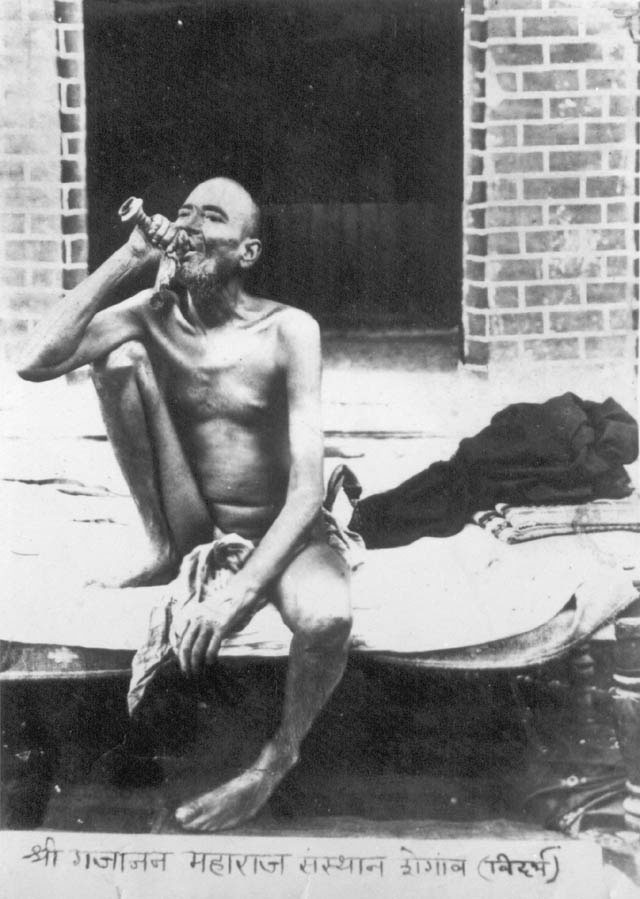
English translation of Adhyay 2. See the Glossary for special terms.
॥ Shri Ganeshay Namah ॥
1. O Nrusinha Saraswati, O power of Dattatreya — again and again you confirm the greatness of the Guru.
2. O Shripad Shrivallabh, your darshan is rare. By the Name alone is it made easy; thereby paramartha (the supreme purpose) becomes easy.
3. By name you are different; by body you are different — yet you have all said the same: the truth that lies in the Name.
4. You speak the words of the Atma; you tell the essential truth of life. You say: practice that essential truth and you cross the worldly ocean.
5. Do not wound anyone's soul — thereby Paramatma becomes wrathful. Always content the soul — thereby Paramatma becomes content.
6. Conduct yourself thus: let dimples bloom on others' cheeks; thereby you yourself laugh — by this life is fulfilled.
7. He who wishes to laugh should make others laugh. Thus should all behave; let all dwell in joy upon joy.
8. In one alone becoming wealthy, many troubles enter; right and wrong get mixed up; wrongful deeds occur.
9. Such wealth does not endure; smiles do not bloom on the face; in everyone's eyes only tears are seen.
10. He who has set the play in motion alone shall gather the play together. Without him, all is mere dry leaves — this is told to all.
11. Recognize this truth; never forget it. Convince the mind of it; practice it through action.
12. Without you we are useless; without you, calamity. You alone are powerful in every situation — herein is the true meaning filled.
13. Always practice dharma; always tread this path. Thereby content the soul; content the Supreme Soul.
14. Where Paramatma is contented, that being is blessed. The burden of karma is not felt; he practices good deeds.
15. This is what Gajanan teaches, demonstrating with each action. He says: without good deeds, Paramatma does not come running.
16. Thus did Gajanan act; he beguiled the mind of all. Though he ran with the speed of wind, yet he remained with all.
17. So it happened with Bankat — his consciousness of body left him; his mind was caught in Maharaj; he began to see Maharaj everywhere.
18. So great was his obsession with Maharaj that he forgot food and water. Without Maharaj he was dejected; there was no peace in his mind.
19. How to tell his father? He had no courage; he felt afraid; speaking did not happen.
20. But the elder, Bhavaniram, asked: "Bankat, what has happened to you? Your face looks dejected; your heart seems anxious.
21. You are a strong young lad — why so frightened and timid? What ailment in your body? Why has your face become withered?
22. Tell me first what has happened — what affliction or trouble? A son should never hide things from his father; first tell me the matter."
23. Convincing him somehow, he satisfied his father; the time was passed by — but not the heart.
24. Bankatlal's neighbor — a virtuous gentleman, deeply attached to Bankat — kept asking again and again.
25. He was Deshmukh Ramaji-Pant, very advanced in age, and likewise eminent in experience. To him, Bankat narrated the matter.
26. He said to Ramaji-Pant: "Such a Guru as I have seen — none like him have I ever seen until today. But he ran away with the speed of wind.
27. Still I see that scene — being in Maharaj's company — how he ate from the leftover leaf-plates, was not allured by worldly esteem.
28. I saw the play of an instant, and that very thing impressed itself on the mind. The Guru disappeared; pain has caught my soul.
29. May I see Maharaj. May I obtain his company. May my merit arise. May my life be fulfilled.
30. Maharaj has so beguiled my mind — how can I forget him? Without him I have no rest; food does not taste good."
31. Ramaji-Pant understood: the mind was caught in Maharaj. The thought arose in his mind too — he too became filled with Maharaj.
32. He said to Bankat: "From the account you have given, no such man have I ever seen — these are entirely the leelas of a yogi.
33. Such acts cannot be found, even searching, except in a yogi. Without past spiritual merit, his darshan does not come about.
34. You have taken his darshan — blessed is your life. Without his darshan, I too shall have no rest."
35. In this state four days passed; Maharaj did not appear to him. Bankat held to his obsession; the memory did not fade.
36. One day a kirtankar — Govindbuva Takalkar, on whose kirtan Sharangdhar (Vishnu) was pleased —
37. famed in the Vidarbha region, well-established in kirtan — came on his rounds, and his kirtan was to be held in Shegaon.
38. At the temple of Shankar, all preparations were made. Men and women gathered; everyone was eager.
39. Bankat went to the kirtan; Pitambar the tailor met him; he too set out together to listen to the kirtan.
40. This Pitambar the tailor was very simple-hearted and innocent. The news of the Master, Bankat truly recounted to him.
41. Both went to the kirtan. Suddenly the Master appeared — sitting on the pavement. They were astonished.
42. Then where was the kirtan? Both ran. Going to the Master, they began to ask questions.
43. Both, leaving the kirtan, asked Maharaj: "What shall we bring you to eat? Whatever you tell, that we shall give."
44. Maharaj said to Bankat: "Go to the woman flower-seller's house. If your wish is so, give me zhunka and bhakar to eat."
45. Bankat brought zhunka-bhakar; Maharaj ate it. The digestive fire was satisfied. The Master then looked at Pitambar.
46. He gave a tumba (water-pot) to Pitambar. Maharaj said: "Go quickly to the stream. Fill the tumba."
47. Pitambar said: "The tumba won't sink in the stream — there is so little water. I'll go elsewhere to fetch it. Order me to bring water.
48. The water in this stream — the cattle have spoiled it; so have the passersby. This water is not useful for you."
49. Gajanan spoke at that very moment: "Bring water from the stream itself. Bring the tumba dipped in the stream — not just by handful."
50. Pitambar was a tailor not just in name but also by trade. He cuts cloth exactly to measure; he wastes no cloth needlessly.
51. He sews only as much as the cloth allows; what else can occur to him? He fits within what is; he makes things neat and tidy.
52. With such training, his belly is filled; relying on himself alone, he carries on his trade carefully.
53. One who is always alert in transactions, always alert in worldly esteem, always attentive to worldly life — how can he be attentive to Sat-Chit-Ananda?
54. All his identification is in transactions — what shall fall into his lap? Where there is no inherent existence, what shall come into actuality!
55. He said to Maharaj: "We tailors are skilled in measuring; the eye fits the estimate, and what we estimate is what comes about.
56. What is not in the stream — how shall it fill the tumba? Don't pointlessly send me to the stream; I'll bring it from elsewhere in a moment."
57. Maharaj said to Pitambar: "Don't engage in chatter." By a sign he told him: "You go to the stream."
58. Pitambar replied: "We are clever by nature — we add to our inheritance. Generations upon generations have toiled till today.
59. O Shri Guru! Don't send me to the stream. I'll bring water; order me to go elsewhere.
60. Shri Guru, there's no water in the stream. I'll not be deceived by a mirage. Don't send me to the stream; don't think me a fool."
61. Shri Guru heard everything; he gave a slight smile. He smiled at the child-like understanding — but still asked for water from the stream.
62. Maharaj said: "You are clever by nature. You say there'll be no water. But I shall say: in the stream the tumba shall sink.
63. Let us make a wager. Who wins today?" — said Maharaj. Pitambar took the wager.
64. Pitambar quietly went, dipped the tumba in the stream — and in an instant the tumba was filled. He was astonished.
65. The Guru's words proved true. He had this experience. Pitambar brought the tumba; he placed his head at the Guru's feet.
66. Bankat learned the secret: this yogi was the Master indeed. Both became his own; they began to ask for blessings.
67. Shri Guru tells here: in idle chatter there is nothing in actuality — usefulness lies in obeying the order.
68. What does not happen by speaking happens by action. Man becomes Narayan by action — not by mere chatter.
69. The pot that is to be filled with water — once filled, makes no sound. He who is truly wise — he shows it through action.
70. Such should one be in speaking — let it not fall short in dealings. Guard your words in speaking; the balance of household life is preserved.
71. To Bankat the Guru said: "Don't keep refusing the bread. I am not satisfied with that — bring out the betel-nut quickly."
72. Bankat, along with the betel-nut, placed coins on the Guru's hand. Humbly he said: "O Guru-Lord! Accept this."
73. Looking at the coins, Maharaj spoke smilingly: "Don't, considering me a Brahmin, refuse to give it back.
74. I shall not be satisfied by money; I shall not be allured by money. I do not want such transaction; you are very clever.
75. I do not want worldly money; I do not want borrowed splendor. Serve me with devotional feeling; with that I am content.
76. The service of the Name is dear to me — not the service of your wealth. I do not want to be entangled — there is never any release.
77. In the repetition of the Name everything is known; calamities become fruitless. Spend so much time in the Name that your trade settles harmoniously.
78. To the play of destiny — who shall obstruct it? Give importance to the Name — that is what is useful in any situation."
79. Maharaj said to both: "Go now to the kirtan. Listen to the kirtan; bring it into practice."
80. Both went to listen to Govindbuva's kirtan. They did not press Maharaj — they recognized his authority.
81. By the neem tree, Maharaj sat to listen. Govindbuva's kirtan — what to ask of the crowd?
82. Govindbuva the kirtankar, on whatever exposition, gave a juicy description, made the listeners absorbed.
83. The Lord asserts His importance, sends kirtankars from time to time, brings about good qualities and good deeds, brings about the protection of dharma.
84. All the play is of devotional feeling; all goes by inspirations — likewise by simple feeling, for the awakening of people.
85. The kirtankar gives such a kirtan that the listeners get absorbed. Again and again he gathers them; again and again they listen.
86. He impresses on the mind the seal of devotion. How can one forget the kirtankar? The greatness of devotion endures; the glory of the Name grows.
87. Such was the famed Govindbuva — adorning fresh devotion in the people's hearts; he was reciting the first half of the Hamsa Gita from the Eleventh Skandha (of the Bhagavata).
88. Govindbuva, in the kirtan, would call out from time to time: "Without the Lord, nothing comes together.
89. The Lord has pervaded all; nothing remains apart. All is to be called His; 'mine, mine' is one's own undoing.
90. Invoke the Lord at any time; thus he meets you at any time. Invoke him anywhere; thus you will see him anywhere.
91. He who is in his contemplation — the Lord is at his door. He pervades the whole moving and unmoving world; thereby he is seen in all.
92. Such an obsession should be in the mind: the Lord should be seen everywhere; entrust worldly life to him; immerse the soul in the Name.
93. Don't make mere vows; don't look only at the golden spire. First the foundation, then the spire — fix this in mind."
94. Whoever practices these truths, the Lord meets him. Govindbuva remained absorbed in the first half; Gajanan spoke the latter half.
95. Govindbuva is amazed; in his mind he recognizes — like recognizes like. This experience came here.
96. Where there is earnest longing, there is the right convergence and company. Therefore at Shegaon, the company of saints came about.
97. Govindbuva said: "He who speaks the latter half — he truly seems a powerful yogi. Bring him to the temple."
98. Bankatlal and Pitambar, with other people, before the Master, said: "The kirtankar invites you."
99. All entreated him; they wished the Master would come. Maharaj did not move from there, from the place where he sat.
100. Govindbuva at last folded his hands; he truly entreated, saying: "Show grace just once.
101. We pray to Gajanan: come and sit in the temple. Sit on a high seat. Have grace upon your children.
102. You yourself are truly Shankar; you sit outside. The temple will remain empty. Without you the temple does not look beautiful."
103. But the Guru is not allured by a seat; he does not yield to insistence. One who is by nature already free — who shall bind him?
104. Maharaj said to Govindbuva: "Don't bring pretense into your conduct. Stay in agreement with whatever you said in the kirtan.
105. First practice yourself, then perform kirtan. Don't have mere learnedness. First do, then preach.
106. You shine in the kirtan, but in our presence you prove zero. You quote a verse from the Bhagavata, but you do not act accordingly.
107. You have a storehouse of words; on them your belly is filled. Going from kirtan to kirtan — this does not become you.
108. Your insistence has no truth in it. The world is all illusion; the Lord pervades everything; the Lord is filled in all.
109. I shall not yield to insistence; I shall listen to the kirtan right here. Don't fall to insistence — you will be embarrassed.
110. You keep the kirtan going. Keep the flame of name-repetition lit. Save up the Name in such a way that devotees meet God.
111. The light of the Name's flame will fall, will destroy the darkness; thereby the right path will be obtained; thereby the world will be uplifted.
112. Listen to my speech: you gather many people, but don't let go of the truths one by one — those that are useful in life one by one.
113. Go and complete the kirtan. Let me sit here. Speak words of personal experience. Let the kirtan not be dry."
114. Govindbuva returned and began the kirtan. His mind was caught in Maharaj; he spoke about Maharaj.
115. "This is Pandurang himself — he who is seen in Pandharpur — that very one has come to Shegaon, in actuality outside the temple."
116. Govindbuva became absorbed; he ended the kirtan there itself. Everyone agreed with what he said. People went to their homes.
117. Bankatlal too went home. Joy was packed in his heart. He told the matter to his father; Bhavaniram too became overjoyed.
118. Bankat said to his father: "Maharaj should be brought to the house. Pandurang himself coming to our house — fortune will arise to brighten us."
119. The father gave assent. Bankat became overjoyed. He began to dance with joy. He began to look out for the auspicious day.
120. Thus four more days passed. Bankat began to search for Maharaj. He asked everyone: "Where has Maharaj been seen?"
121. After four days, at the time of sunset, the Guru-Mother appeared in person. Joy could not be contained even in the sky.
122. Bankat went forward; he began to plead with Gajanan: "May the Guru's feet bless our home. This is my prayer to you."
123. Maharaj began to look. Bankat thought: "Have I made a mistake?" Maharaj gave a slight smile.
124. Bankat understood in his mind: Maharaj had given assent. Bankat took hold of Maharaj's hand.
125. As the sun was setting, at the time of lamp-lighting, this sun of enlightenment arose at Bankat's home.
126. All in the house came to welcome him; there was no limit to joy. They brought a five-flame arati and waved it before Maharaj.
127. The father, on seeing him, was overjoyed in his heart. Making a full prostration, he entreated Maharaj.
128. He seated him on a low wooden seat; he began the worship of the Guru. He washed the lotus-feet; he applied sandal paste on the brow.
129. He put a flower-garland around the neck; it dangled around the neck. The extraordinary radiance — everyone began to gaze.
130. Bankat was His beloved. How could he be orphaned? Each has his own auspicious moment — Bankat's fortune had arisen.
131. He considers the Master his mother and father; the feeling arises spontaneously. The joy has no measure; the joy becomes boundless.
132. He doesn't merely call him; the longing was already in his heart. Thereby the Guru came to his house. He was absorbed in the Guru's service.
133. Though in business, his mind was on Gajanan. He stayed in the Guru's command, always in humble feeling.
134. Though firm in business, he was no less in following the Guru's order. The seal of humility and modesty in his bearing — face matched action.
135. Bhavaniram folded his hands and said: "You yourself are Shankar in person. You came at the time of Pradosh, into the house of a beloved devotee."
136. Bhavaniram, in his mind, began to think at once: "If we make food fresh now, the yogi will leave from here.
137. If he goes from the house hungry, heaps of sin will fall upon me — merit will be set aside; sin will be in my fate.
138. He thought for a moment; the puris from noon came to mind. Almonds and dried dates as accompaniment — I shall give him for his meal."
139. Whatever came to mind, that was brought for service. He began to plead with Maharaj to begin the meal.
140. The Guru-figure began. He partook of each item. Whatever was served to him, he was content with the meal.
141. Bankat was very devoted by nature. How could he let go of the Guru? He said: "Stay here for the night. Have grace upon us."
142. The Guru consented. By a sign he confirmed it. All began coming for darshan; it became Pandharpur itself.
143. The next day dawned. Bankat in his service brought hot water for Maharaj to wash his face.
144. After morning ablutions, water for bath was ready. Everyone was ready in service; all were quick in service.
145. Pitchers of hot water were poured over Maharaj's body by men and women, who were greatly overjoyed.
146. Some applied shikakai; some applied soap; some applied saffron and sandal; they poured fragrant water.
147. After the bath was complete, he was dressed in a pitambar (silken cloth); with honor he was seated on a cushion — the king of yogis, the great sage.
148. For the worship of the Guru, everyone was eager; Bankat too was one of them, in the Guru's service.
149. Bankat begins; he performs worship from the heart. Inner feeling awakens; there is no scope for hypocrisy.
150. By hypocrisy nothing is obtained — this will not prove false. This was impressed in Bankat's heart; therefore there was no hypocrisy.
151. What Bankatlal recognized, the same we should recognize — so that fortune arises, as it came to Bankat.
152. He who practiced hypocrisy drowned in the worldly ocean. He who reveled in hypocrisy never crossed.
153. We should learn how to cross. He who wishes to cross should not practice hypocrisy. Don't forget this truth.
154. The hum of auspicious sounds — and in it the Guru's worship. Joyful atmosphere everywhere — as if the worship of Paramatma itself.
155. A sacred thread on the Guru's neck, along with flower-garlands; ornaments of pearls and rubies — whatever came to mind.
156. Saffron tilak on the brow; perfume bouquets on his body; with rose water; everywhere the scent of fragrance.
157. That day was Monday — Shankar himself was at the door. As if Mahakaleshwar appeared, or as if Omkareshwar appeared.
158. Many varieties of naivedya were to be offered to the Master. In that itself we should consider ourselves blessed — the moment of fortune's rise.
159. As the day passed, evening came. Each came for darshan; Ichharam alone remained.
160. Ichharam and Bankat were cousin brothers. Ichharam was a Shankar devotee, deeply absorbed in that.
161. It came to his mind: on Monday, exactly at Pradosh time, to go for the worship of the Guru.
162. "Let us complete the vow's pause. At sunset, when Pradosh is on, we shall serve the Guru a meal."
163. As sunset approached, marking the Pradosh time, he completed his bath, thinking: "When shall I touch the Guru's feet?"
164. Here Guru Gajanan, with "Gan Gan" in his mouth, was surrounded by devotees taking darshan.
165. Just then Ichharam came, bringing the worship materials. He stood before Maharaj; he began the worship.
166. "Without you eating, I shall not take food — this is my heart's wish; accept the meal.
167. All devotees have become satisfied; I alone have remained unsatisfied. Fulfill my heart's desire — this is my purpose."
168. Over Ambemohor rice, lentils were poured; ghee was poured over that; thus a heap on the plate.
169. Jalebi, Raghavdas (sweet), motichoor (laddu) — sweet dishes added to it. Along with chutney and koshimbir; laddu, anarse, ghewar.
170. To sit on, an ornate stool; on the four-legged platform a plate; with rangoli decorations — what to ask of the splendor!
171. Though the plate was full, decorated with five-fold delicacies, for Gajanan it had no importance — he was absorbed in mantra-japa.
172. So absorbed in japa, what attention to food! He who is content in feeding others — what attention shall he give to the taste of food!
173. Only the hungry and distressed do not eat all the food. To fulfill the devotee's full wish, all began to eat.
174. Gajanan would eat, on the strength of simple feeling. He sat at the plate and began eating quickly.
175. There was excessive insistence; the result was bad. The intestines became burdened; thereby vomiting suddenly came on.
176. The Guru said: "Hey Ichharam! Excessive insistence has bad results. Restrain insistence; don't insist deliberately.
177. Eat such an amount as the digestive organs can digest. Let the intestines not be burdened; let pain not be the result.
178. Take such food that there will be digestion; don't deliberately invite pain. The intestines cannot bear excess weight.
179. At meal time, contemplation of the Lord — thereby the mind remains pleased. With a peaceful mind eating food, you become a cause for good deeds.
180. Action depends on contemplation. Keep faith in the Guru. Fill the belly such that good conduct will be brought about.
181. The diet of holy men is sattvik; thereby their thoughts are sattvik. Food is the symbol of thought; thought is the symbol of food.
182. Though one should eat with relish, yet partake with a peaceful mind. By mere drudgery, the belly is never filled.
183. The soul greatly loves peace of mind. He who stays in the Guru's command stays in such thoughts. He alone experiences peace of mind.
184. Don't insist excessively on others; that brings them anguish. Satisfy the soul; don't be a burden to it.
185. Make the mind pleased. Take the soul's blessings. Excessive insistence should not be anguish. Listen to the Guru's words."
186. There was much insistence on the Master; therefore vomiting occurred on the plate. The place was cleaned quickly; the Master was brought back to his original place.
187. The Master was in "Gan Gan Ganat Bote"; the Mother was absorbed in the Name. Here each was eager for darshan; they began to stand in line.
188. At night time, the dindis came for bhajan. The bhajan reached its peak — the resounding of the Name.
189. The Name came to the lips; men and women were spellbound. The Master, with finger-snapping rhythm — joy had no limit.
190. With "Gan Gan" always on his lips — therefore the people called him Gajanan. That very "Gajanan" became current.
191. Daily a new pilgrimage came; they took darshan of Gajanan. Mass-feeding occurred there; each became blessed.
192. Bankat was very meritorious; thereby he obtained Gajanan. Words came spontaneously to his lips, seeing the whole celebration.
193. Some said to him: "Hey! The Lord has left Pandharpur; he has come to your home, seeing your devotional feeling."
194. The home of devotee Bankat became Pandharpur now. Shegaon-town buzzed; some called it Haridwar.
195. To the light of the sun — how much shall one describe? Such are Maharaj's leelas — many wonders.
196. Maharaj is daily new — he sits and stays anywhere; he eats and drinks anything; everything is to be considered the same.
197. Sometimes he takes an auspicious bath; sometimes a bath in muddy water; sometimes a hot-water bath; sometimes an ice-cold bath.
198. Maharaj's leelas are many. Of them, some — a glimpse — in the second chapter. Countless still remain.
199. Some shall be described in the third chapter. Stay with attention. You will become absorbed in Maharaj's wonders.
200. By Saraswati's grace this chapter has been written. Don't make it Gana-Maharaj's matter to brag of. If there is any deficiency, don't blame Gajanan.
॥ Shubham Bhavatu ॥
॥ Offered to Shri Ganapati and Saraswati ॥
॥ Thus ends the second chapter of Shri Guru Gajanan Leela Granth ॥